
Review: "Vallée du Silicium"
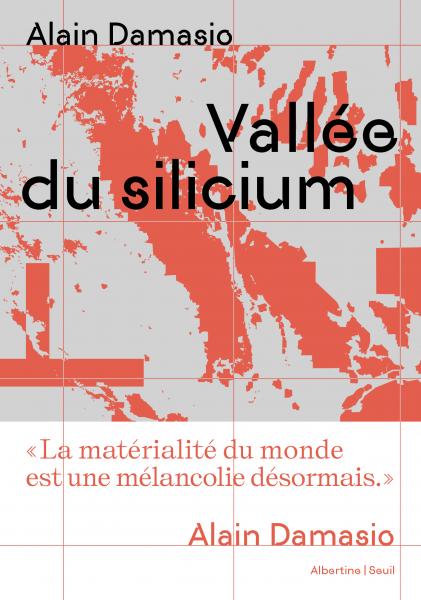
For a little while, I've been reading fiction again, with a twist: I'm actually listening to it. One of the authors I wanted to "read" was the French author Alain Damasio, and I found a perfect occasion with the "Vallée du Silicium" audiobook.
I'm not aware of any translation of this book at the time of writing, so this post is a review of the French audiobook.
When content meets form
A first intriguing aspect of this book is the way the author plays with and models the form of the text to help the emergence of deeper concepts.
Then the overall structure of the book mixes non-fiction — mostly transcripts of interviews the author conducted in Silicon Valley — and science fiction in an organic way.

Two other aspects are more expressive and distinctive in the context of French literature, and would make a lesser impression in English:
- the author coins new words that he uses to pave the way for his reasoning
- he experiments with the feminine plural (in French the plural is more typically and arbitrarily masculine), which creates a very interesting effect for a French audience.
Phenomena
The book explores various ways in which humans and technology influence one another:
- the proprietary world being built from and around Apple's ring
- autonomous cars trained by drivers, which may deprive those drivers of their jobs
- communications that split us apart through interfaces that afford control to third parties
- the "tech" leaders who sell a future made by themselves for their own benefit

The author suggests thinking about these phenomena in terms of how we control, or relinquish control of, our bodies:
- a first body (biological: our body and spirit)
- the second body, connected and measured, tries to control the first
- a third body is the abstraction we project from ourselves
- a fourth body, "unconscious" and undomesticated.
Ideologies
These phenomena lead us to more philosophical concepts:
- Individualism is justified by a broken interpretation of Stoicism
- Technology currently boosts this individualism and pushes us away from forms of solidarity and generosity (which the author labels "communism").
- This technology gives us a way to have things done, while taking from us the power to do things ourselves.
The author depicts a dynamic in which humanity slowly disappears by relinquishing more and more of its creativity and power to each new technological device.
The short story that wraps up the whole text adds an interesting spin. Without spoiling it too much, I recall it shows all the pitfalls of modern technology accumulating toward a cataclysm from which a new kind of humanity unexpectedly emerges.
Stimulation
 The book is well worth listening to, and the ideas presented by the author are extremely stimulating.